
Loss adjuster visits and leak detection evidence
Prepare for the assessment, understand the technical report and keep track of decisions. Published by ADI Leak Detection, a detection contractor, not a loss adjusting firm.
Prepare a useful loss adjuster meeting
A clear agenda helps identify decisions and unresolved evidence. Visit preparation guide.
-
1
Confirm the appointment
Who is attending, what they need to inspect and how to send documents securely.
-
2
Separate facts from assumptions
Label first observations, confirmed findings and areas not yet tested.
-
3
List outstanding questions
Ask what evidence is missing and who can authorise the next work.
-
4
Record the follow-up
Agree the next action, responsible person and expected update.
Insurer, loss adjuster and leak detection: who does what
Your insurer
The company that sold you the policy
- Logs the claim and gives you a reference
- Decides what the policy covers
- Appoints a loss adjuster on bigger claims
- Pays the settlement, less your excess
The loss adjuster
Appointed and paid by the insurer
- Inspects the damage and your evidence
- Works out the cause and whether it is covered
- Agrees the scope and cost of repairs
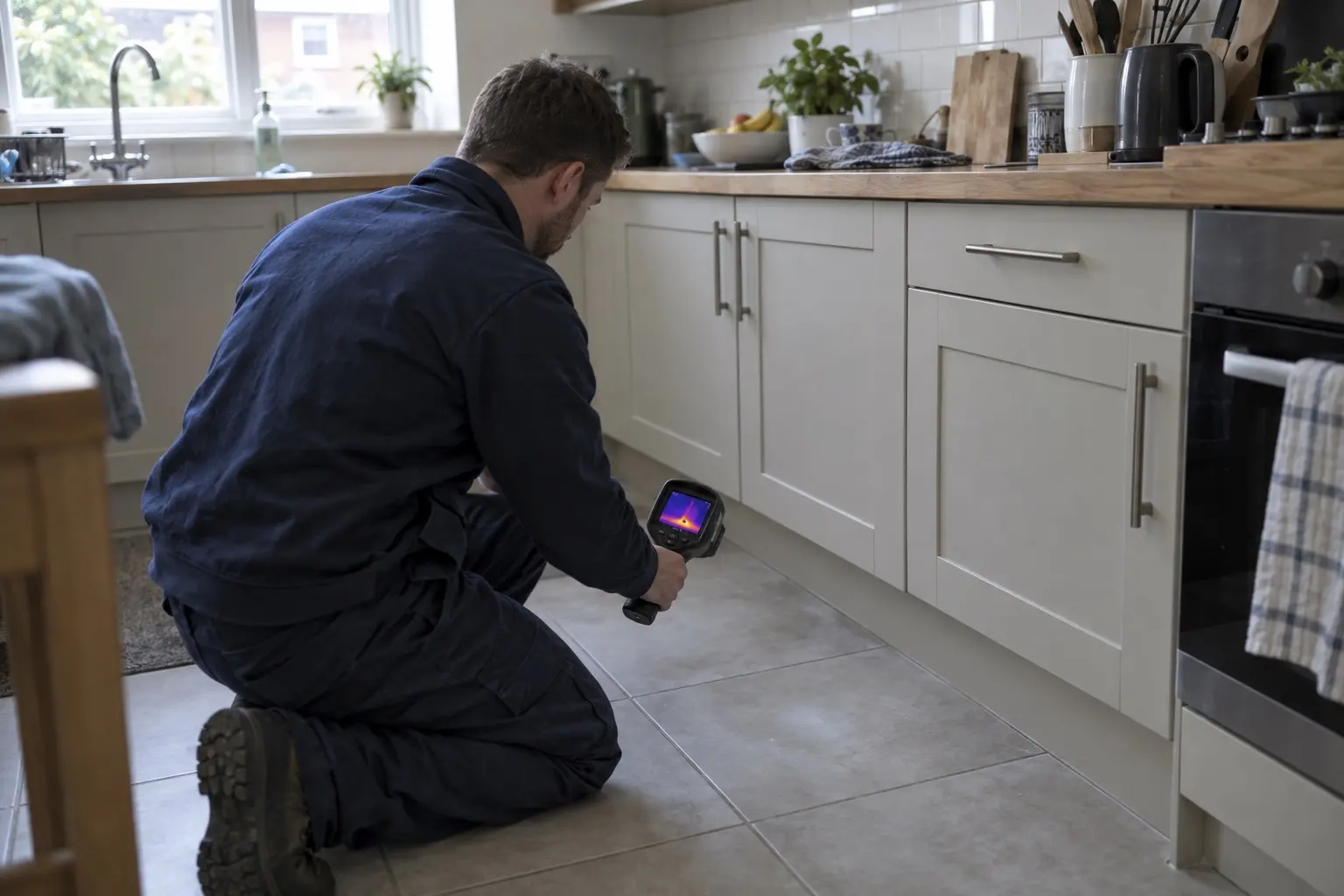
ADI Leak Detection
Investigates the source and records technical findings
- Traces hidden leaks with thermal imaging, acoustic listening and tracer gas
- Records the suspected location and any limitations
- Reports the cause with photos and readings
- Confirms the scope of any separate access or repair work
What the technical evidence can establish
The report should distinguish the area tested, the readings, the interpretation and any direct confirmation of the failed component.
Leak detection case studies
-
 Hot water
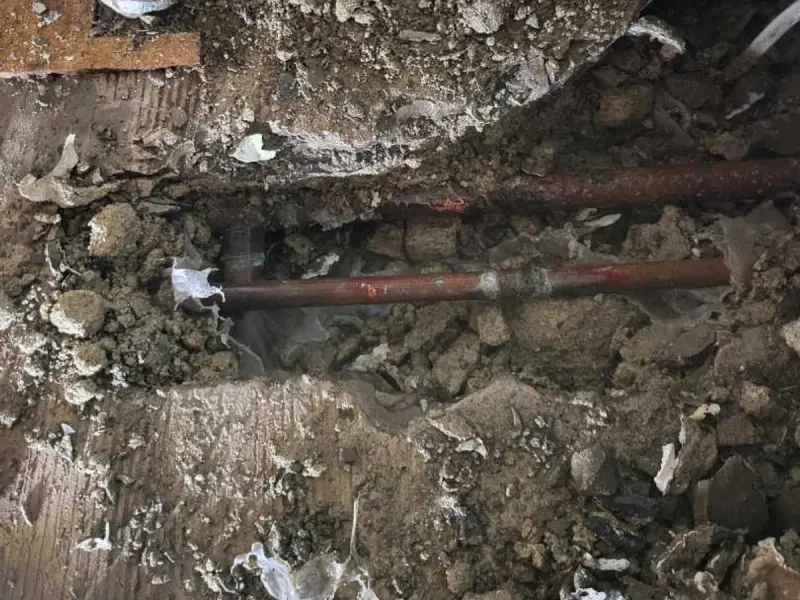
 pipe leaking under a kitchen screed
Poplar, London, engineer Mark Pavitt
What the owner noticed
Water damage spreading across a kitchen and the bathroom next to it, and a mains supply to the combi boiler that kept running with no hot water in use.
What ADI found
Thermal imaging showed an irregular warm area under the sink and behind the dishwasher. Beneath the damp proof membrane was pooled water and a 15mm copper hot supply pipe with a hole in its underside.
Outcome
The section was renewed and held a one-hour pressure test at 4.0 bar with no drop.
For the claim: The investigation was covered under the buildings policy's trace and access clause. The customer was advised to send the engineer's report to the insurer to arrange drying and reinstatement.
Original case study: ADI Leak Detection -
 Water mains
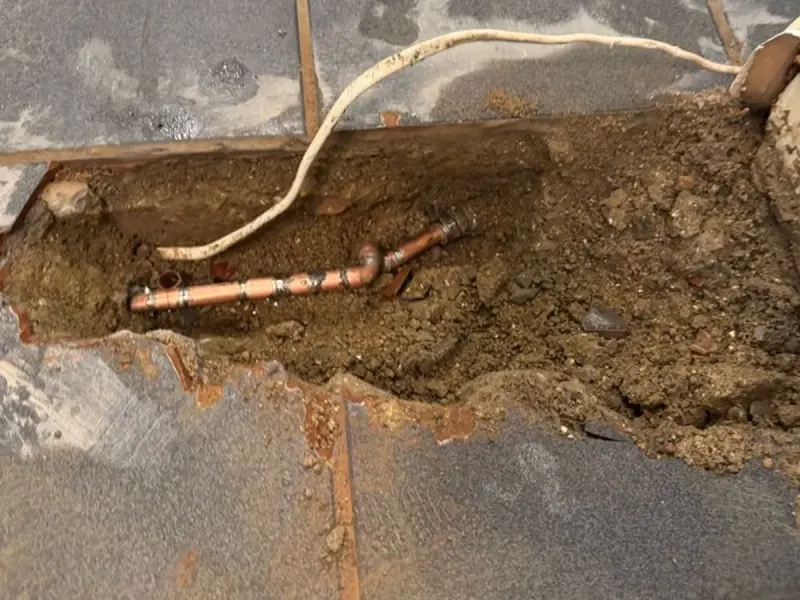
A leak the water company could not find
Bourne End, Buckinghamshire, engineer James Hunter
What the owner noticed
The water company had already visited and replaced the external main, but the problem carried on. Running water could be heard on walking into the house with nothing in use.
For the claim: The recommended next steps were to file the documentation with the insurer for the damage and repair, and to claim a leak allowance from the water company.
Original case study: ADI Leak Detection -
 Central heating
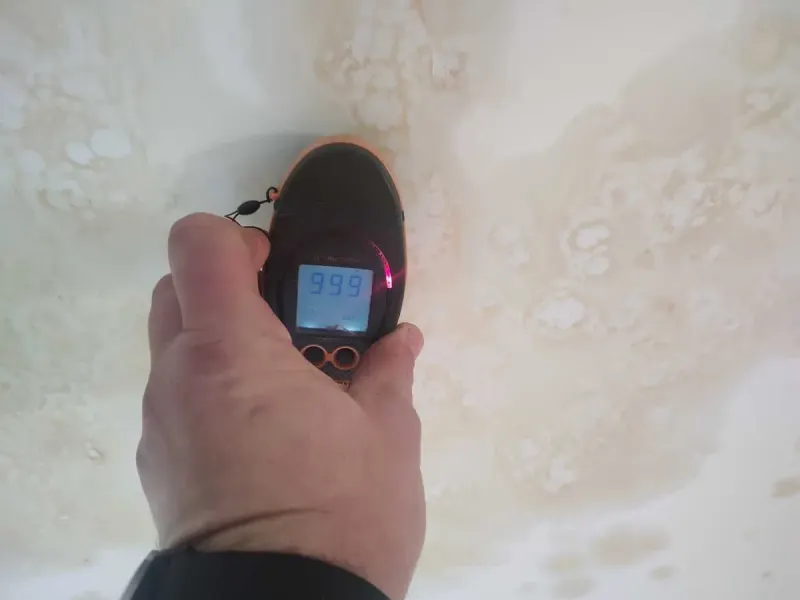
Damp living room ceiling, nails through a heating pipe
Bedford, Bedfordshire, engineer Gabor Weber
What the owner noticed
The living room ceiling had turned damp and discoloured, and the 14-radiator heating system had dropped to 0 bar.
For the claim: A report was prepared for the insurance company, giving the customer a documented record of the cause, the location, how it was found and the repair.
Original case study: ADI Leak Detection
Guides to loss adjusters and water damage claims
-
What is a loss adjuster?
Who they work for, what they check, and how to prepare for the visit.
-
Technical report evidence
Understand observations, conclusions and limitations in the report.
-
Loss adjuster or loss assessor?
Two very different jobs with very similar names, and who pays each one.
-
Emergency work records
Document necessary changes before the adjuster inspects.
Loss adjuster and leak detection questions
Does this website offer loss adjusting?
No. ADI publishes this guidance and provides leak detection. It does not assess policy entitlement or negotiate your settlement.
Does an adjuster visit mean the claim is accepted?
No. An appointment may be part of the investigation. Ask which decisions are confirmed and which remain pending.
Can I correct something in the assessment?
Identify the point in writing, attach the relevant evidence and ask the insurer or adjuster to review it. Keep dated versions of technical reports.